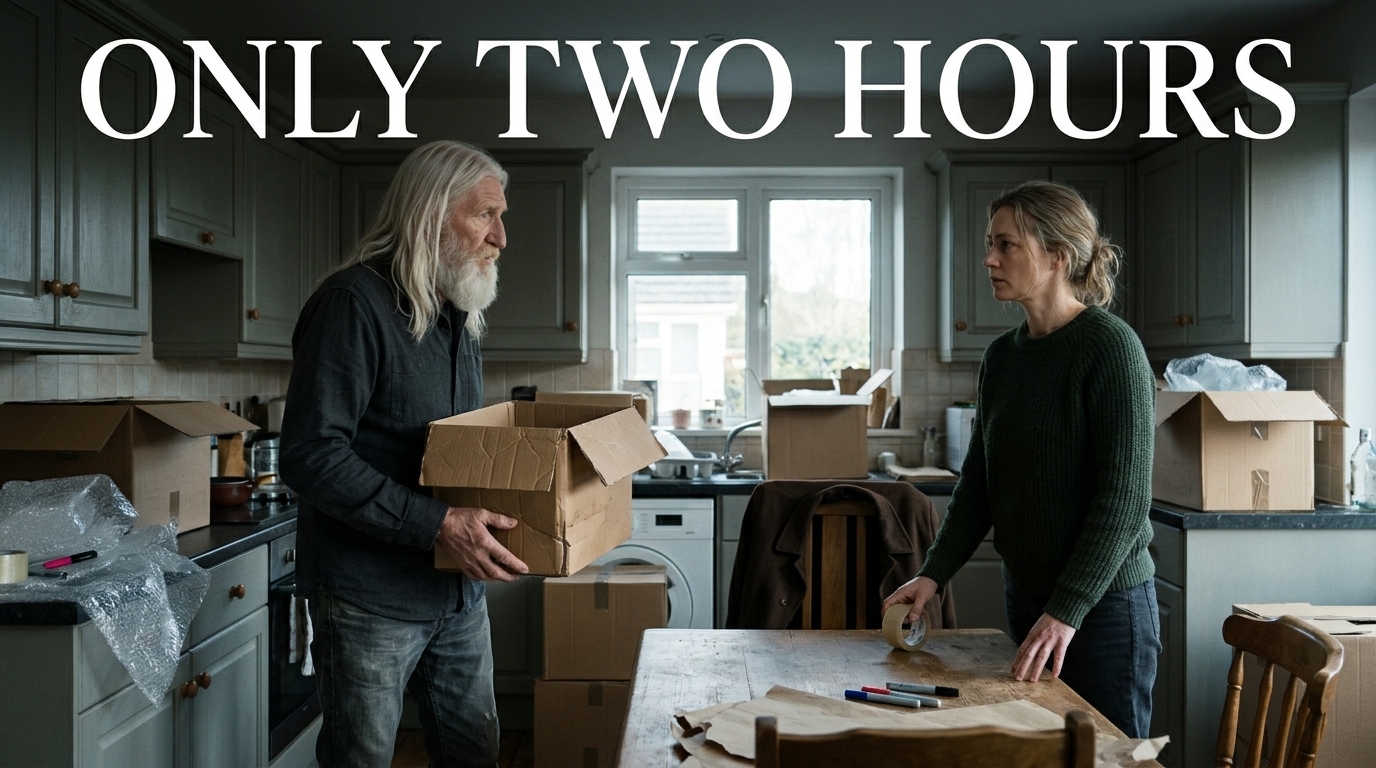
An original fictional story inspired by the themes of ‘After I’m Gone,’ told from the perspective of a fictionalized Michael Bennett.
Part 1/3 — The Hours She Could Spare
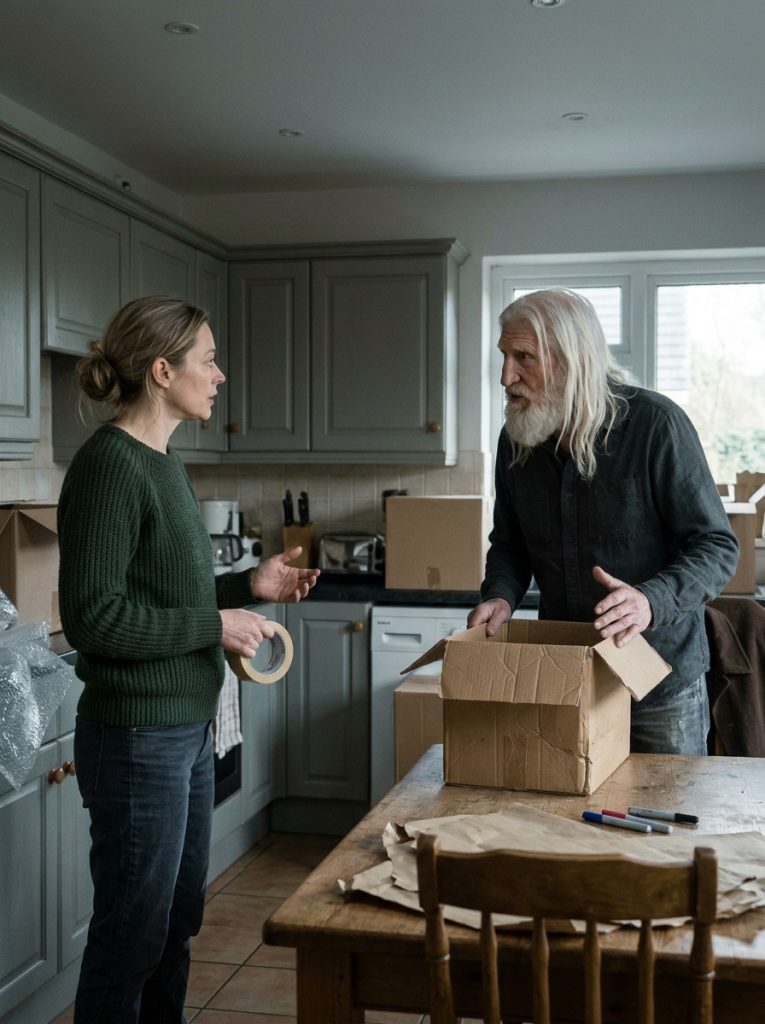
My daughter set a roll of packing tape on the kitchen table and said she could stay until noon. I had bought a chicken for supper. It sat in the refrigerator beneath a bowl of potatoes, enough food for a visit she had apparently never agreed to make.
“Two hours?” I asked.
“That’s what I said on the phone, Dad.”
I stood with an empty cardboard box against my hip. Behind Ruth, the back door remained open, letting November air into the kitchen. She closed it, hung her brown coat on a chair, and asked where we should begin.
“Forty years in this place,” I said. “We’d better work fast.”
She kept her hand on the chair a moment before letting go.
I was moving in eighteen days. The house had become too much work and too much expense for one man. I had chosen a small rented flat near the library, signed the papers, and paid the deposit. Nobody was forcing me out. That almost made it harder to explain why every cupboard felt like an accusation.
At sixty-nine, I could still carry an amplifier. I could play three sets without forgetting a chord, though I sometimes forgot why I had opened the refrigerator. What I couldn’t do was keep paying to heat rooms I entered only to check for leaks.
Ruth lived twenty-five minutes away. For months, that distance had felt longer than any road I had driven for work.
She was forty-two, managed the office at a plumbing company, and had a sixteen-year-old daughter, Ellie. Since her marriage ended, her calls usually came from the car. Sometimes I heard a turn signal ticking while she asked about my week. Then she reached wherever she was going, and our conversation ended with the engine.
I had stopped telling her anything that couldn’t fit between two traffic lights.
“Kitchen first?” she asked.
I nodded toward the cupboard over the cooker. She rolled up the sleeves of her green jumper, took down the mixing bowls, and placed them on a folded towel. She remembered which blue bowl had a crack. I had forgotten.
For twenty minutes, we worked well together. She asked what would fit in the flat. I measured a drawer with a ruler because neither of us trusted my cheerful claim that it would hold everything. We discovered eleven wooden spoons.
“Were you expecting an orchestra?” she asked.
“Percussion section.”
She laughed, and for a moment I wanted nothing more than to keep sorting spoons.
Then her phone lit up. She checked it, typed a short reply, and laid it facedown.
“Somewhere better to be?” I asked.
“I’m covering the collection desk at the food pantry this afternoon. I told you.”
“People you don’t know get the afternoon.”
Her shoulders rose as she took a breath. “I agreed to cover it three weeks ago. You asked me on Thursday.”
I remembered the Thursday call. I remembered saying Saturday would be useful. I also remembered her saying something about the morning, which I had treated as the beginning of a visit rather than its limit.
I had heard the part of her answer that gave me hope and discarded the rest.
That admission arrived quietly. I didn’t share it.
Instead, I fetched the chicken and held it up by its plastic wrapping. The gesture looked worse than it had felt in my head.
“I thought we’d have a proper meal.”
“You could have asked.”
“Does everything need an appointment now?”
“Some things do.”
She said it without raising her voice. I would almost have preferred a shout. A shout would have let me feel we were equally to blame.
After my wife, Jean, died four years earlier, Ruth had come every Sunday. She brought groceries I hadn’t requested, stayed through lunch, and put clean sheets on the spare bed even though nobody slept there. Gradually, Sundays became alternate Sundays, then occasional cups of tea.
At first I blamed work. Then I blamed the divorce. Eventually, I decided she had simply grown used to a world in which I could be postponed.
I never asked what those early Sundays had cost her. She never told me. Between us, we had managed to turn an arrangement neither of us discussed into a broken promise.
At half past eleven, we carried two boxes to the hall. Ruth had written KITCHEN—EVERYDAY on one and KITCHEN—ASK FIRST on the other.
“What’s that supposed to mean?”
“It means you said you wanted the serving dish, then said you didn’t, then told me it was your mother’s. I’m not making that decision for you.”
I sat on the bottom stair. The dish was ordinary white china with a chip underneath. My mother had served beans in it. Jean had used it for roast potatoes. I didn’t especially like it. I couldn’t bear to be the person who decided its work was finished.
Ruth sat beside me, leaving room for the box.
“You can keep something just because you want it,” she said. “It doesn’t have to earn its place.”
I looked at her hands. A small split near her thumbnail had caught the tape. She had been working steadily for nearly ninety minutes while I counted how little time she had given me.
“I’ll keep the dish.”
She crossed out ASK FIRST and wrote FRAGILE beneath it.
We finished the cupboard. She swept the broken bits of an old cork into her palm, washed the mugs, and asked whether Tuesday evening would help. Six until eight, she said. She could bring sandwiches.
“Don’t put yourself out.”
“I need an answer, Dad.”
“Yes. Tuesday.”
At noon, she put on her coat. I followed her into the hall, where the boxes already made the house seem narrower.
“Funny,” I said. “You’ll probably find a whole day when there’s a funeral to attend.”
She stopped with her fingers around the door handle.
I had imagined that sentence many times. In my imagination, it made her turn back, understand, and stay. Spoken aloud, it sounded ugly and small.
“Please don’t say that to me again.”
“It’s how it feels.”
“Then tell me you miss me.”
I looked past her at the hedge. The words she offered were so simple that I couldn’t reach them.
“I can’t keep paying for a future I haven’t caused,” she said. Then she left.
The house wasn’t quiet immediately. Her car started. A delivery van rattled over the drain outside. The refrigerator motor clicked on. Only after all that did I hear how alone I was.
I put the chicken in the oven anyway. At four, I called Len, who had played drums beside me in more draughty rooms than either of us cared to count. He arrived with carrots and no advice until I gave him the story.
“She packed all those?” he asked, looking toward the hall.
“Two hours’ worth.”
“Looks useful.”
I cut the chicken too fiercely and sent a piece of skin onto the tablecloth.
“You taking her side?”
“I’m eating your dinner.”
We ate. He told me his upstairs neighbour had bought a treadmill and apparently planned to walk to Scotland before breakfast. I laughed despite myself. Later, we divided the leftovers into containers.
I had spent the day waiting to be abandoned, even while my daughter was carrying boxes beside me.
That evening, I called Ruth to say Tuesday was still on. I had rehearsed an apology, but when she answered, I asked instead whether Ellie would come too.
“No. She’s staying out of this.”
“Out of what?”
There was a pause, then a scraping sound, as though Ruth had pulled out a chair.
“The last time we came for dinner, you asked her why her mother never wanted to see you. She cried in the car. That’s why I’ve been coming alone.”
I sat down beside the telephone charger. I remembered asking the question. Until that moment, I had remembered it as a joke.
⬇️ CLICK Page 2 to Read Part 2 ⬇️